Introduction
A normal dental visit in 2026 is no longer about fixing problems after they appear. Compared to 10 years ago, routine dental checkups have shifted toward prevention, early detection, and patient-focused care, supported by modern technology and higher clinical standards.
Today, a typical dental visit means:
- Dental issues are identified early, often before pain begins
- Preventive care is prioritized over treatment-first approaches
- Digital diagnostics improve accuracy and comfort
- Appointments are shorter and more organized
- Hygiene, safety, and documentation standards are significantly higher
These changes lead to clearer communication, better outcomes, and more predictable long-term oral health for patients.
What a “Normal” Dental Visit Looked Like 10 Years Ago
Ten years ago, a routine dental visit followed a far more reactive approach. Most checkups focused on identifying visible problems and treating them once symptoms appeared, rather than preventing issues before they developed.
Typical Dental Checkup Process Then
- Visual examination using basic tools
- Manual probing to check for cavities or gum issues
- X-rays taken only when pain or obvious problems existed
- Cleaning was often performed with limited explanation, which left many patients unsure whether procedures like scaling were safe or necessary, a concern that modern dentistry now addresses more clearly through understanding whether professional teeth cleaning is safe.
Limitations of Dental Visits in the Past
- Problems were often detected late, after damage had started
- Preventive guidance was minimal or generic
- Patients had limited visibility into their own oral health
- Appointments could be longer or repeated due to a delayed diagnosis
Because diagnostics and data were limited, treatment decisions relied heavily on symptoms and experience rather than early indicators. This approach worked, but it increased the likelihood of complex treatments and unexpected dental issues over time.
What Defines a “Normal” Dental Visit in 2026
A routine dental visit in 2026 is structured, preventive, and guided by data rather than guesswork. Instead of reacting to pain or visible damage, dentists focus on identifying risks early and maintaining long-term oral health through planned, evidence-based care.
Dental centers reflect this shift by designing checkups around prevention, consistency, and clear patient understanding.
Preventive Care Comes First
- Risk assessment based on age, habits, and oral history
- Early identification of cavities, gum disease, and wear
- Instead of one-size-fits-all visits, dentists now recommend personalized recall schedules based on age and development, which is especially important when considering the best age to start orthodontic treatment in India.
Digital Diagnostics Are Standard
- Intraoral cameras and digital scans for detailed examination
- Early detection of issues not visible to the naked eye
- Clear visual explanations help patients better understand findings, especially when evaluating cosmetic or restorative options such as zirconia vs porcelain smile makeovers.
Shorter and More Efficient Appointments
- Pre-visit records and documented history reduce repetition
- Faster diagnosis and clearer treatment planning
- Fewer follow-up visits due to accurate first-time assessments
In 2026, a “normal” dental visit is proactive rather than reactive. The goal is to reduce future problems, improve patient comfort, and ensure that every visit adds measurable value to long-term oral health.
How Technology Changed the Patient Experience
Technology has reshaped dental visits not just clinically, but also emotionally and practically for patients. In 2026, the focus is on clarity, comfort, and confidence rather than uncertainty or anxiety.
More Comfort and Less Anxiety
- Improved pain management techniques reduce discomfort
- Faster procedures lower the time spent in the dental chair
- Predictable treatment plans reduce fear of the unknown
Clear Communication and Transparency
- Visual tools show patients exactly what the dentist sees
- Problems and treatment options are explained in real time
- Patients are involved in decisions rather than informed afterward
Fewer Surprises After the Visit
- Early detection prevents sudden or emergency treatments
- Clear documentation supports long-term care planning
- Patients leave knowing what to expect next
Clinics that follow modern standards, use technology to turn routine visits into informed, collaborative experiences where patients feel more in control of their care.
Safety, Hygiene, and Standards Are Higher Than Ever
Safety and hygiene are no longer background processes in dental care. By 2026, they are central to how a dental clinic operates and how patients judge the quality of care. Modern dental visits follow stricter protocols designed to reduce risk, improve consistency, and build trust.
Advanced Infection Control and Sterilization
- Standardized sterilization processes for all instruments
- Improved disinfection protocols between patients
- Better handling and storage of clinical equipment
Stronger Clinical Standards and Accountability
- Clear documentation of examinations, findings, and treatments
- Consistent protocols followed across every visit
- Reduced chances of errors due to standardized workflows
Safer Environment for Patients and Staff
- Cleaner clinical spaces with defined safety zones
- Reduced cross-contamination risks
- Greater confidence for patients during routine visits
These improvements mean that a normal dental visit in 2026 is not only more effective but also safer, reflecting the higher clinical standards followed by established dental institutions such as City Dental Hospital in Rajkot.
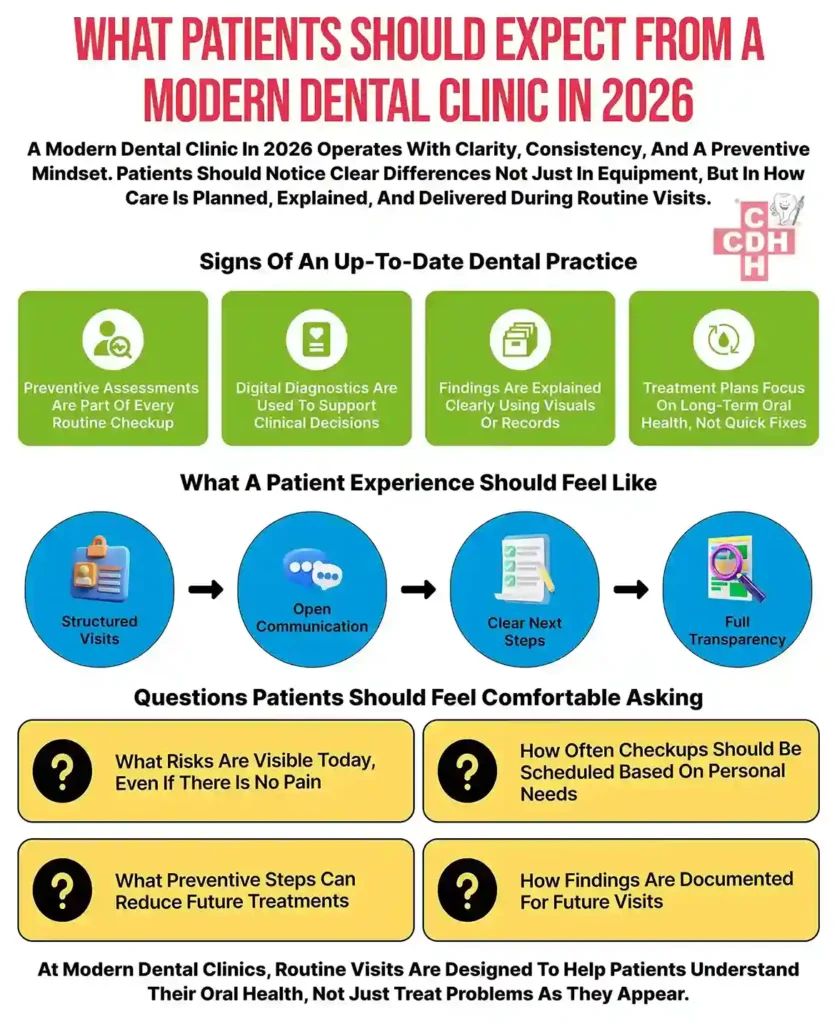
What Patients Should Expect From a Modern Dental Clinic in 2026
Why These Changes Matter for Long-Term Oral Health
The shift in how dental visits are conducted directly impacts long-term oral health outcomes. When care is preventive, structured, and data-driven, problems are addressed earlier and managed more effectively.
- Early detection reduces the need for complex or invasive treatments
- Preventive planning helps slow or stop disease progression
- Consistent documentation improves continuity of care over time
- Clear communication enables patients to follow better daily habits
- Predictable care lowers long-term costs and unexpected dental issues
In 2026, a normal dental visit is designed to protect oral health before problems escalate.
Conclusion: A “Normal” Dental Visit Has Been Redefined
A normal dental visit in 2026 is no longer about reacting to pain or fixing problems after damage occurs. It is preventive, structured, and focused on long-term oral health. Compared to 10 years ago, patients benefit from earlier detection, clearer communication, higher safety standards, and more predictable care.
Dental institutions that align with these modern expectations, such as City Dental Hospital, represent how routine dentistry has evolved to meet higher clinical and patient-care standards.
In simple terms, a routine dental visit has evolved from problem-solving to health preservation. That shift defines modern dentistry and shapes better oral health for the years ahead.
FAQs
1. How often should I visit the dentist for a routine checkup?
Regular dental checkups help detect issues early and maintain oral health. Most patients are advised to visit at least every 6 months, but City Dental Hospital also recommends personalized schedules based on your age, risk factors, and oral history.
2. What services does City Dental Hospital provide?
City Dental Hospital offers comprehensive dental care, including dental implants, full mouth rehabilitation, invisible aligners, crowns & bridges, teeth whitening, braces, pediatric dentistry, wisdom tooth removal, and more.
3. Is dental treatment painful?
City Dental Hospital uses advanced technology and pain management protocols to minimize discomfort. Many procedures are designed to be painless or minimally uncomfortable, with a focus on patient comfort and relaxation.
4. Do you offer digital diagnostics for early detection?
Yes, modern diagnostic tools such as intraoral imaging and advanced exams help identify issues early, often before symptoms appear, improving treatment outcomes and planning.
5. Is City Dental Hospital suitable for international patients?
Absolutely. The clinic supports dental tourism with online consultations, structured treatment planning, and assistance for overseas visitors seeking high-quality care in India.
6. How does City Dental Hospital ensure safety and hygiene?
The hospital follows strict sterilization and hygiene protocols, maintaining high standards of safety, comfort, and clinical consistency for all patients.