Did you know that the connection between oral health and heart health is something doctors and dentists have been paying closer attention to for years?
It may surprise you, but your mouth is not just where digestion begins. It is actually part of your body’s larger health system. When your gums are unhealthy or your teeth are neglected, the effects can travel far beyond your smile.
The good news is, understanding this link early can help you take simple, meaningful steps to care for both your teeth and your heart.
What Is the Link Between Oral-Heart Connection?
Let’s understand this gently and clearly.
When bacteria build up in your mouth around your gums, between teeth, or along the gumline, they can cause inflammation. Over time, this inflammation does not stay only in your mouth.
Research suggests that oral health and heart disease may be connected through this very path. Harmful bacteria from an infected or inflamed mouth can enter the bloodstream. Once in the blood, they may contribute to inflammation in blood vessels, which is one of the known risk factors for cardiovascular conditions.
Scientists use careful wording here; they say oral health “is associated with” heart disease, rather than a direct cause-and-effect. But the association is strong enough that both dentists and heart specialists take it seriously.
How Gum Disease Can Affect the Body
Think of gum disease as a slow, silent process.
It often starts with plaque that sticky film that forms on your teeth when you eat sugary or starchy food and don’t clean properly. When plaque is not removed, it hardens into tartar and begins to irritate the gums.
Early signs include:
- Gums that look red or swollen
- Bleeding when you brush or floss
- Persistent bad breath that doesn’t go away
If left untreated, gum disease can progress. The infection can go deeper below the gumline, into the supporting bone. At this stage, the way oral health impacts heart health becomes more relevant because the bacteria involved are no longer contained.
For example, when you chew, brush, or even just swallow, bacteria from infected gums can enter your bloodstream. This is not meant to alarm you; it is simply something worth knowing so you can act early.
Can Poor Oral Hygiene Increase the Risk of a Heart Attack?
This is an important question, and it deserves an honest, careful answer.
Oral health and heart attack risk are connected through the same pathway, chronic inflammation and bacterial spread. Studies have found that people with gum disease may have a higher likelihood of cardiovascular events, including heart attacks. However, this does not mean that poor oral hygiene directly causes a heart attack.
What it does suggest is that long-term gum disease, especially when it goes untreated, can add to the body’s inflammatory burden. Combined with other risk factors like smoking, high blood pressure, or diabetes, the teeth and heart link becomes something worth taking seriously.
Signs Your Oral Health May Need Attention
Your mouth often gives you clear signals when something is not right. Here are signs that are worth a conversation with your dentist:
- Bleeding gums while brushing or flossing, even occasionally
- Gum recession – gums pulling back and making teeth look longer
- Loose teeth in adults (this is not normal)
- Chronic bad breath that persists despite brushing
- Pain or sensitivity while chewing
- Redness, puffiness, or tenderness in the gum area
Any one of these signs, especially if it has been going on for a while, is a good reason to book an appointment and get your gums evaluated properly.
Who May Be at Higher Risk?
Some people may be more vulnerable to the overlap between oral health and heart disease. This includes:
- People with diabetes – high blood sugar can affect the gums and slow healing
- Smokers or former smokers – tobacco use is a major risk factor for both gum disease and heart conditions
- People with high blood pressure – some BP medications can cause dry mouth, which raises cavity risk
- Those with existing gum disease – especially if it is chronic or untreated
- People with a family history of cardiovascular disease
If you fall into any of these categories, preventive dental care is not just a comfort; it is a practical step toward protecting your overall health.
Daily Habits That Support Both Oral and Heart Health
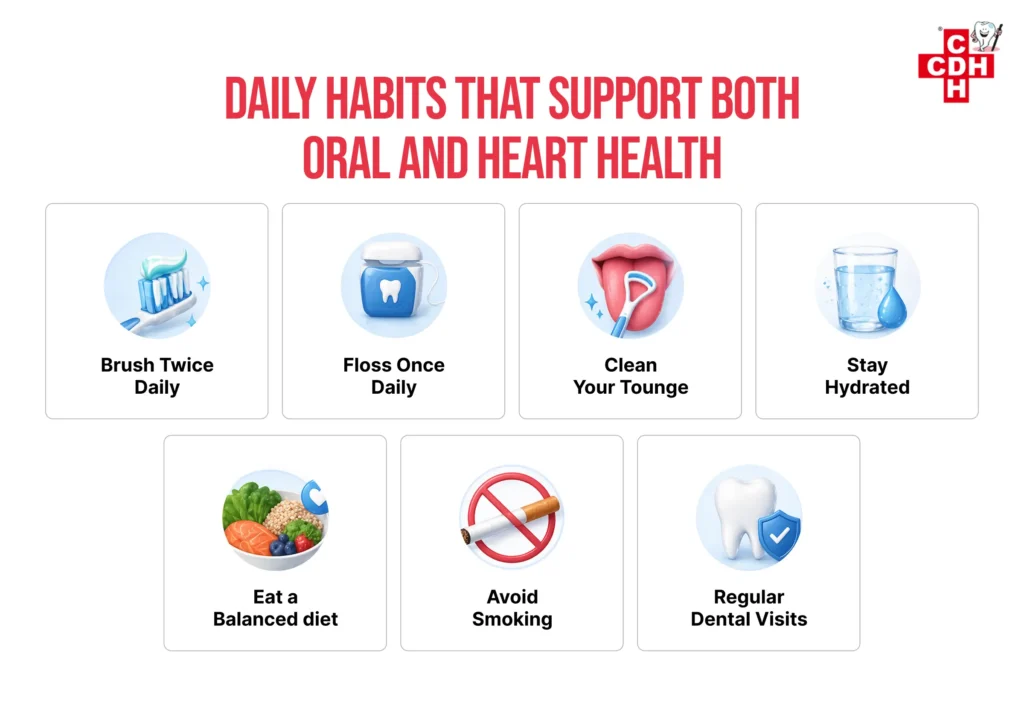
The connection between oral health and heart health does not have to feel overwhelming. In fact, the daily habits that protect your teeth are almost the same habits that support your body overall.
Here is a simple checklist:
- Brush twice a day – use a soft-bristled toothbrush and fluoride toothpaste for 2 minutes
- Floss once daily – this removes bacteria from areas your brush cannot reach
- Clean your tongue – bacteria love to settle on the tongue’s surface
- Stay hydrated – water helps wash away food particles and prevents dry mouth
- Eat a balanced diet – reduce sugar, and eat more vegetables and calcium-rich foods
- Avoid smoking – this is one of the most impactful changes for both gum and heart health
- Visit your dentist regularly – even when nothing feels wrong
Small, consistent habits go a long way. You do not need to be perfect, just consistent.
If you want to know the proper way to brush your teeth, you can also check a guide – How to brush your teeth properly
Professional Dental Care: Why Checkups Matter
Brushing at home is important, but there is a limit to what any of us can do on our own.
Professional cleaning removes hardened tartar that a toothbrush simply cannot touch. A trained dentist can spot early gum disease, recession, or inflammation before it becomes a bigger problem. Scaling and root planing, a deeper cleaning procedure, can help treat gum disease at its source.
Regular gum evaluations also allow your dental team to track any changes over time. If oral health impacts heart health through chronic, untreated conditions, then early intervention at the dental clinic is one of the smartest steps you can take.
Think of dental checkups not just as tooth cleaning but as a small investment in your long-term wellness.
When to Visit City Dental Hospital, Rajkot
If you have been putting off a dental visit or if any of the warning signs above sound familiar, this is a gentle nudge to take action.
At City Dental Hospital in Rajkot, we believe that great dental care is about more than just your teeth. Our team takes a whole-body approach to oral health, helping patients understand how their mouth connects to their overall wellness.
Whether you need a routine checkup, a professional cleaning, a gum evaluation, or guidance on any specific concerns, we are here to help, without judgment and without pressure.
A short visit today could make a real difference tomorrow.
Frequently Asked Questions
1. Is there a connection between oral health and heart health?
Yes. Studies show a link between oral health and heart health. Gum disease can allow harmful bacteria to enter the bloodstream, causing inflammation that may increase the risk of cardiovascular problems.
2. Can gum disease affect the heart?
Gum disease can contribute to chronic inflammation and may increase the risk of heart conditions over time. Bacteria from infected gums can travel through the bloodstream and impact blood vessels.
3. Does brushing and flossing support heart health?
Good oral hygiene, brushing, flossing, and regular dental checkups help reduce bacteria and inflammation. While not a substitute for heart care, it supports overall and cardiovascular health.
4. What dental issues should heart patients watch for?
Heart patients should monitor for:
- Bleeding gums
- Gum disease
- Oral infections
- Loose teeth
- Persistent bad breath
These may indicate harmful bacterial activity.
5. How often should I visit a dentist?
Most people should visit a dentist every 6 months. Those with gum disease or other health conditions may need more frequent checkups for better prevention and early treatment.
Healthy Gums, Healthier Future
Your oral health is more connected to your overall well-being than many people realize.
Healthy gums, regular cleaning, and timely dental care may support better long-term heart health by reducing inflammation and keeping oral bacteria under control.
If you are looking for preventive dental guidance, City Dental Hospital in Rajkot offers the kind of expert, patient-friendly care that helps you stay ahead of problems before they grow.
Because a healthier smile is not just good for your confidence, it is good for your whole body.