If you or someone you love is managing diabetes, you already know how much it can affect daily life, from what you eat to how you feel. But here is something that often gets overlooked: the strong connection between oral health and diabetes.
Yes, your mouth is more connected to your blood sugar levels than you might think. And taking care of your teeth and gums is not just about a bright smile; it is actually an important part of managing your overall health.
Let us walk you through how diabetes affects your teeth and gums and what you need to know, in simple terms.
Why Oral Health Matters in Diabetes
Think of your mouth as a window into your body’s health. When blood sugar levels are high, even for a short time, it creates conditions in the mouth that bacteria absolutely love.
Here is why: high glucose levels increase the sugar content in your saliva. More sugar means more food for harmful bacteria. More bacteria means more plaque. And more plaque leads to a whole range of oral health problems in diabetes that can sneak up on you quietly.
On top of that, diabetes can affect your body’s ability to fight infections. This means your gums are more vulnerable, and even small dental problems can escalate faster than they would in someone without diabetes.
The Link Between Diabetes and Oral Health
How High Blood Sugar Impacts Your Mouth
When blood sugar control slips, the effects inside your mouth are real and noticeable. Here is what typically happens:
- More bacteria and plaque build up on your teeth and along the gumline
- Your gums become inflamed, tender, and may bleed easily
- Saliva production can decrease, leaving your mouth dry and uncomfortable
- Your body heals more slowly from cuts, ulcers, or dental procedures
- You become more prone to fungal infections like oral thrush
Common Oral Health Issues When Diabetes Affects Your Teeth and Gums
There are several oral health problems in diabetes that dentists see regularly. Understanding them is the first step to preventing them.
Gum Disease (Periodontitis)
Gum disease is one of the most common and most serious oral health concerns for people with diabetes. In fact, it is often called the “sixth complication” of diabetes.
In the early stages, gum disease (called gingivitis) causes redness, swelling, and bleeding when you brush. If it progresses to periodontitis, it can damage the bone supporting your teeth and even lead to tooth loss.
People with diabetes tend to develop more severe gum disease, and it tends to progress more quickly. The combination of reduced immunity and high blood sugar creates a challenging environment for your gums.
Dry Mouth (Xerostomia)
Mouth dryness and diabetes often go together. Diabetes can reduce saliva flow, leaving your mouth feeling dry, sticky, or uncomfortable throughout the day.
This might not sound serious, but saliva is actually your mouth’s first line of defence. It washes away food particles, neutralises acids, and helps prevent cavities and infections.
When saliva is reduced, diabetes mouth problems due to diabetes create the perfect conditions for tooth decay, mouth sores, and even difficulty speaking or swallowing.
For example, if your mouth often feels dry, especially in the morning, or if you find yourself sipping water constantly just to feel comfortable, this could be a sign worth mentioning to your dentist.
Tooth Decay
Higher sugar levels in saliva do not just feed harmful bacteria; they help bacteria produce acid that attacks tooth enamel. This directly increases the cavity risk.
People with uncontrolled diabetes are significantly more likely to develop tooth decay. Combined with dry mouth (which removes saliva’s protective effect), the risk is even higher.
The good news is that with regular brushing, a good diet, and careful blood sugar control, tooth decay is very preventable.
Slow Healing and Infections
One of the lesser-known effects of diabetes is how it slows the body’s natural healing process. If you have had a tooth extraction, a small mouth ulcer, or any dental procedure, recovery may take longer than expected.
This delayed healing also means infections are harder for your body to fight off. Oral thrush, a fungal infection that appears as white patches in the mouth, is particularly common in people with diabetes, especially those using dentures or taking certain medications.
If you notice unusual sores, persistent white patches, or discomfort that does not seem to be healing, do not wait. It is always worth getting it checked.
Warning Signs You Should Not Ignore
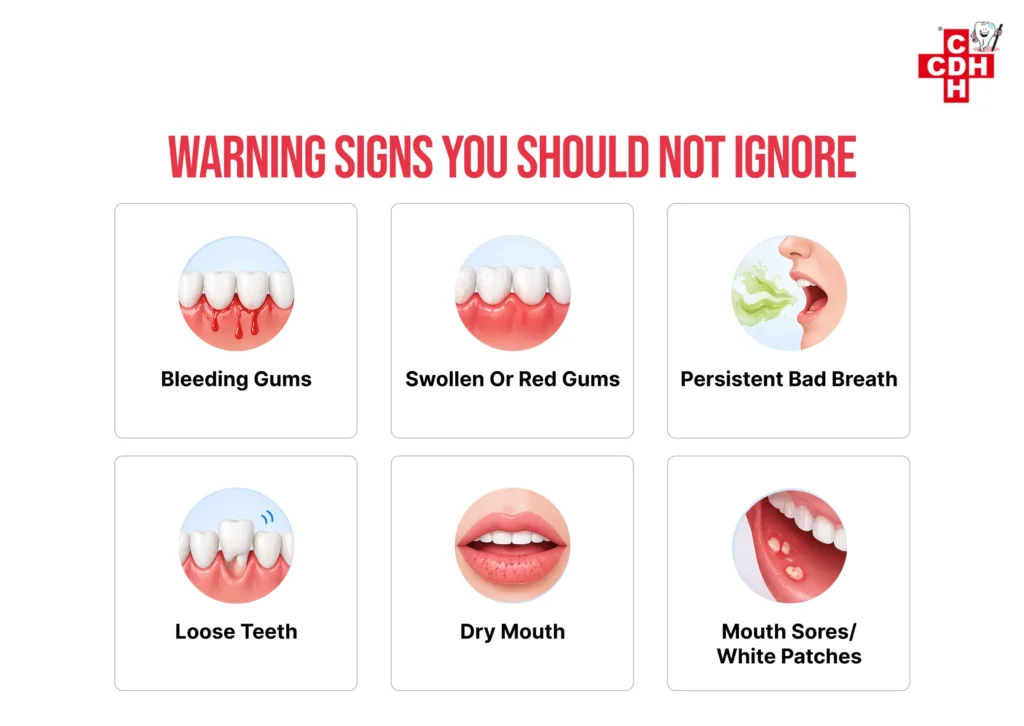
Sometimes our bodies send us signals that something is not quite right. Here are some warning signs that deserve attention, especially if you have diabetes:
- Gums that bleed when you brush or floss
- Swollen, red, or tender gums
- Persistent bad breath even after brushing
- Loose teeth or teeth that feel different when biting
- A dry, sticky sensation in your mouth most of the time
- Painful chewing or a swollen jaw
- White patches or sores inside the mouth that do not heal within two weeks
- Increased tooth sensitivity to hot, cold, or sweet foods
How to Protect Your Oral Health with Diabetes
Here is the reassuring part: with a few consistent habits, you can significantly reduce your risk of dental problems even with diabetes.
Maintain Blood Sugar Levels
This is the single most important step. When your blood sugar is well-managed, the conditions inside your mouth become far less favourable for bacteria and infection.
Think of good blood sugar control as the foundation of your oral health. Work closely with your doctor to keep your levels within the target range and let your dentist know how your diabetes management is going.
A simple, consistent daily routine goes a long way. Here is what we recommend:
- Brush twice a day – use a soft-bristled toothbrush and fluoride toothpaste. Gently brush along the gumline, not just the tooth surfaces.
- Floss once a day – flossing removes plaque from between teeth where your toothbrush simply cannot reach.
- Use an antibacterial mouthwash – this helps reduce the bacterial load in your mouth and keeps your breath fresh.
- Clean your tongue – bacteria love to hide on the tongue’s surface, too.
- Replace your toothbrush – every 3 months, or sooner if the bristles start to fray.
Stay Hydrated
Since mouth dryness and diabetes are closely linked, staying well-hydrated is a genuinely effective and easy step. Drinking plenty of water throughout the day helps stimulate saliva production and rinse away food particles and bacteria.
If dry mouth is a persistent problem for you, speak to your dentist. There are gentle rinses and products specifically designed to help that can make a real difference to your comfort.
Also consider cutting back on caffeine and alcohol, as both can contribute to dehydration and worsen dry mouth symptoms.
Regular Dental Visits
We understand that visiting the dentist may not be at the top of your list, but for people with diabetes, regular check-ups are especially important.
Ideally, aim for a dental check-up and professional cleaning every six months. Always let your dentist know that you have diabetes, and share information about your medications and recent blood sugar readings. This helps them provide the most personalised care for you.
When to See a Dentist
Regular check-ups are important, but there are situations where you should not wait for your next scheduled appointment.
Please contact your dental clinic promptly if you experience:
- Sudden or increasing tooth pain
- Gums that bleed every time you brush, or bleed spontaneously
- A tooth that has become loose
- A sore, ulcer, or lump in your mouth that has not healed after two weeks
- Swelling in your jaw or face
- Difficulty opening your mouth or swallowing
Final Thoughts
Managing diabetes takes real effort, and we truly appreciate how much you are already doing to take care of your health. Adding dental care to that routine might feel like one more thing, but the connection between oral health and diabetes means that looking after your mouth is also looking after your whole body.
Good gum health can actually support better blood sugar control. And better blood sugar control means a healthier mouth. It is a positive cycle and one that is absolutely within your reach.
Whether you are just starting to learn about diabetes and oral health, or you have been managing your condition for years, our team is here to support you in a way that is non-judgmental and personalised to your needs.
Ready to take the next step?
Book a dental check-up with City Dental Hospital today. Whether it has been a while since your last visit or you have noticed some of the warning signs above, we would love to help you maintain a healthy, comfortable smile for life.
FAQs
How does diabetes affect oral health?
Diabetes can impact your oral health by increasing sugar levels in saliva, which encourages harmful bacteria growth. This raises the risk of gum disease, tooth decay, and other oral health problems in diabetes.
Why is gum disease more common in people with diabetes?
People with diabetes are more prone to gum disease because high blood sugar weakens the body’s ability to fight infections. This makes it easier for bacteria to damage the gums and supporting tissues.
What are the early signs of gum disease in diabetes?
Common early signs include red or swollen gums, bleeding while brushing, persistent bad breath, and gum sensitivity. Recognizing these symptoms early can help prevent serious complications.
Can diabetes cause dry mouth?
Yes, dry mouth due to diabetes is quite common. High blood sugar levels can reduce saliva production, leading to mouth dryness and discomfort.
How does mouth dryness affect oral health in diabetes?
Mouth dryness and diabetes are closely linked. Reduced saliva makes it harder to wash away food particles and bacteria, increasing the risk of cavities, infections, and bad breath.
Can controlling blood sugar improve oral health?
Absolutely. Maintaining stable blood sugar levels can significantly reduce oral health problems in diabetes, including gum disease and infections.
How often should diabetics visit the dentist?
People with diabetes should ideally visit the dentist every 3–6 months for regular check-ups to monitor and prevent oral health issues.
Is gum disease reversible in diabetic patients?
In its early stages (gingivitis), gum disease can be reversed with proper care. However, advanced gum disease (periodontitis) requires professional treatment and ongoing management.
What are the best oral care tips for people with diabetes?
Brush twice daily, floss regularly, stay hydrated, manage blood sugar levels, and schedule routine dental visits to maintain good oral health.
Can untreated oral health problems affect diabetes control?
Yes, untreated gum disease can make it harder to control blood sugar levels, creating a cycle where diabetes and oral health problems worsen each other.